
Local Guides
Selling Estate Jewelry in Tampa Bay: A Walkthrough
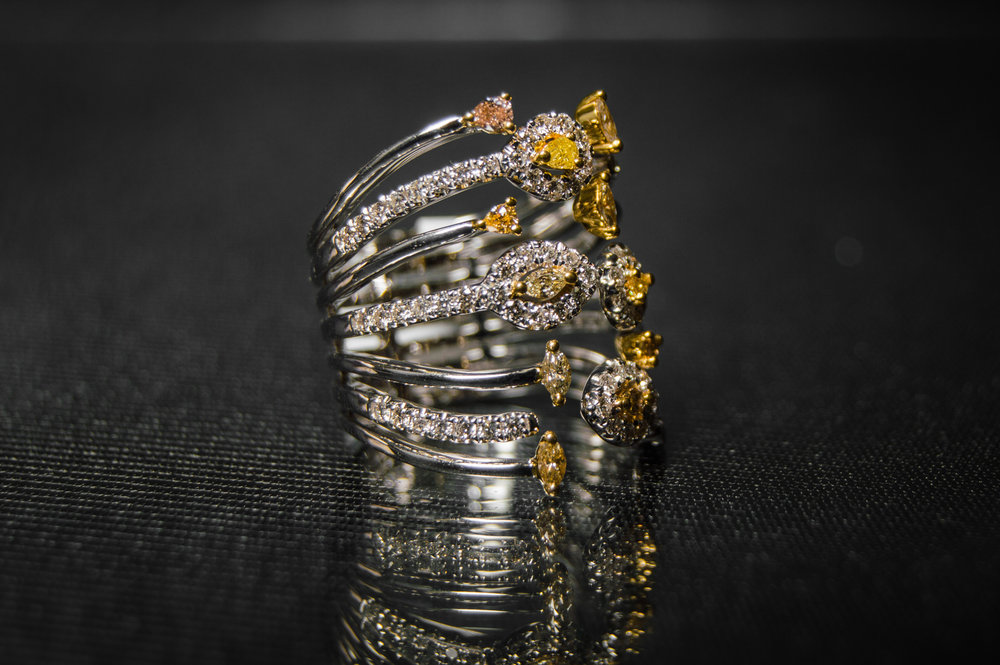
A lot of jewelry in Tampa Bay was inherited. Florida has a high retiree population, families cluster here, and pieces get passed down, tucked away, or divided among siblings after an estate settlement. When it comes time to sell some of that jewelry, most people have no idea where to start. This is a walkthrough of what happens when you bring estate jewelry to a buyer, what affects the price you get, and a few tips for getting a fair deal.
Before you sell
Go through what you have. Group pieces by type (rings, chains, bracelets, earrings, watches, brooches, loose stones). Note any pieces with designer signatures, hallmarks, or original boxes and papers. Pull together whatever paperwork you have, including any existing appraisals, GIA reports, receipts, or estate documentation. You do not strictly need any of this to sell, but having it in hand usually means a stronger offer because the buyer has less work to do to verify the piece.
Do not clean anything aggressively. A soft cloth is fine. Ultrasonic cleaners, harsh chemicals, and polishing compounds can damage stones (especially emeralds, opals, and pearls) and remove patinas that add value to antique pieces. Leave those surfaces alone until the buyer sees them.
Take a photo inventory on your phone. Not because you will need it to sell, but because it helps you keep track of what went where if you are selling across multiple visits or to multiple buyers.
What affects the price
Three things drive the offer on estate jewelry.
Intrinsic material value. The gold, silver, or platinum content of the piece, priced against the current wholesale spot market. For plain gold chains, simple bands, or broken pieces without significant gems, this is basically what the offer is. We weigh the piece, test the metal purity, and price it against today’s gold market.
Stone value. Significant stones (diamonds above about 0.5 carat, colored stones of gem quality) are evaluated separately. Diamonds with GIA certification sell for more than uncertified ones of the same visual grade because the buyer does not have to discount for grading risk. Smaller accent stones (less than 0.1 carat each) are typically priced as a pile at a rate per carat, not individually.
Designer or period premium. Signed pieces from recognized designers and houses sell for more than comparable unsigned pieces. Tiffany, Cartier, Van Cleef, David Yurman, Bulgari, Chopard, and a handful of others carry premiums ranging from modest to dramatic. Antique and vintage pieces with period authenticity (Art Deco platinum, Victorian gold, Edwardian filigree) also carry premiums when the piece is intact and the origin is clear. Fake designer signatures are common in estate jewelry, so buyers verify authenticity before assigning the premium.
Watches are a category of their own. Rolex, Omega, Patek Philippe, Audemars Piguet, and a few other brands have strong pre-owned markets and hold value well. Most other watches have modest resale. Condition, original parts, and papers matter enormously.
The evaluation process
When you bring estate jewelry to our store, here is roughly what happens.
- We sit down with the pieces. Usually at a counter with good lighting. No appointment needed for walk-in evaluations.
- We weigh and test the metal. Every piece. A small test on an inconspicuous spot, or acid testing for older pieces without hallmarks.
- Stones get graded. Our GIA Graduate Gemologist evaluates diamonds under loupe and scope. Colored stones are identified and assessed for quality, origin, and any treatments.
- Designer attribution is verified. We check hallmarks, signatures, and construction details against what the designer’s authentic work looks like. This catches most fakes.
- We make an offer. Item by item or as a group, depending on how you prefer. We explain how we arrived at each number. You can accept, decline, or think about it.
Walk-in evaluations are free. You are under no obligation to sell. We have had plenty of customers bring pieces in, get a number, and leave with everything they came with.
Common surprises
Customers sometimes have ideas about the value of inherited pieces that do not match what the market actually supports. Some common situations:
“The family always said it was worth a lot.” Family lore can be accurate, generous, or occasionally fictional. Ask for the documentation if any exists. An old appraisal is useful context even if it is stale; it tells you what someone paid attention to.
“It has a big diamond.” Look at the stone under magnification. Large stones that are heavily included, poorly cut, or treated can be worth significantly less per carat than small, well cut, clean stones. A 2-carat I1 stone is usually worth less than a 1-carat VS1 stone.
“It’s gold.” Check the karat stamp. 10k, 14k, and 18k each have different melt values per gram. Some older European pieces are 9k or 15k, which are unusual stamps in the US market. Gold plated pieces have no meaningful metal value.
“It’s a Tiffany piece.” Look for the “T&Co” stamp or “Tiffany & Co” signature. Authentic Tiffany pieces are made from specific alloys and have consistent stamping. Fakes are common, especially in chains and pendants.
Should you sell or keep?
Nobody outside the family can tell you the sentimental value of a piece. What we can tell you is the market value, which is one input to the decision. If the sentimental value is higher than the market value (which is common), keep it or wear it. If the piece sits in a drawer and nobody in the family is attached to it, selling frees up value you can use.
An alternative to selling is re-purposing. Many customers bring us grandmother’s rings with stones they love in settings that no longer suit them. We remove the stones, keep what is meaningful, and build a new piece around them. The cost of the custom work is usually a fraction of the appraised value of the stone, and the result is a piece that keeps the heirloom alive but fits the wearer.
A note on offers from other buyers
Compare offers if you want to. Some customers take our number and shop it to one or two other jewelers before deciding. We welcome this. A good buyer’s offer should hold up to comparison, and if you get a meaningfully higher offer somewhere else we would rather lose the sale than pressure you into taking less.
Be cautious of buyers who will not explain their numbers, pressure you for a same-day decision, or quote dramatically different numbers than other shops. The legitimate range for estate jewelry varies by a small to moderate percentage across reputable buyers. Quotes that differ by 2x or 3x are a sign that someone is either wrong or dishonest.
Stopping in
Our store is at 2338 U.S. Highway 19 N in Holiday, Florida. We are open Monday through Friday 10 AM to 6 PM and Saturday 10 AM to 5 PM. Bring the pieces, any paperwork, and a photo ID. The whole evaluation typically takes thirty to sixty minutes depending on how many pieces you have. Phone (727) 491-3344 if you want to confirm before you come out.
Questions? Stop in or call.
Florida Diamond Center is at 2338 U.S. Highway 19 N, Holiday, FL 34691. We are open Monday through Friday 10 AM to 6 PM, Saturday 10 AM to 5 PM.